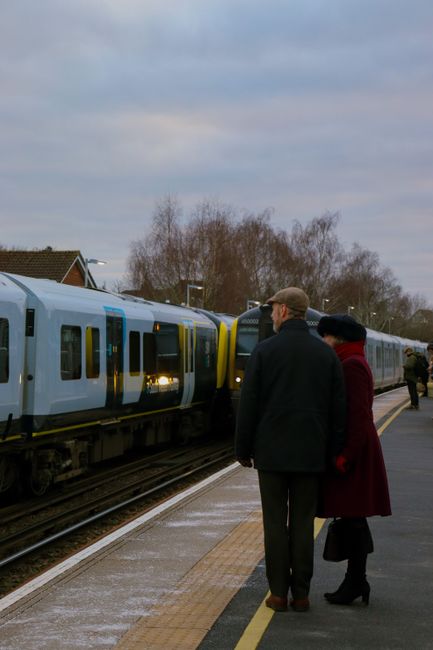
Pinner Station Commuter Friendly Gardeners Early Evening Slots
If you live or work near Pinner Station, you already know the evening rush has its own rhythm: trains coming in, bikes locking up, someone carrying shopping home, and very little time left to deal with the garden. That is exactly where Pinner Station commuter friendly gardeners early evening slots come in. They are designed for people who cannot be home in the middle of the day, but still want a tidy lawn, healthy borders, and a garden that does not quietly run away with itself.
This guide explains what these slots are, why they matter, how they work in practice, and how to choose a garden service that genuinely fits commuter life. We will also cover common mistakes, useful checks, and what to expect from local garden care in a realistic UK setting. Truth be told, timing matters nearly as much as the work itself.
Table of Contents
- Why Pinner Station commuter friendly gardeners early evening slots Matters
- How Pinner Station commuter friendly gardeners early evening slots Works
- Key Benefits and Practical Advantages
- Who This Is For and When It Makes Sense
- Step-by-Step Guidance
- Expert Tips for Better Results
- Common Mistakes to Avoid
- Tools, Resources and Recommendations
- Law, Compliance, Standards, or Best Practice
- Options, Methods, or Comparison Table
- Case Study or Real-World Example
- Practical Checklist
- Conclusion
- Frequently Asked Questions
Why Pinner Station commuter friendly gardeners early evening slots Matters
Gardens do not wait politely for your diary to clear. Grass keeps growing, hedges keep reaching, weeds keep showing up like they pay rent, and fallen leaves do not care whether you were on the Metropolitan line or stuck in a meeting. That is the basic reason commuter-friendly gardening matters near Pinner Station: it helps busy households keep on top of outdoor maintenance without sacrificing work hours or family time.
For many local residents, the garden is used in bursts. A quick coffee outside before leaving for work. A child's football session after school. A late summer supper when the light hangs around and the air still feels warm on the brick paving. If a gardener can arrive in the early evening, they can often work around that pattern instead of interrupting it.
There is also a practical trust point here. When you choose a gardener who understands commuter schedules, you are often choosing someone who plans better, communicates clearly, and works with tighter time windows. That can mean more reliable visit times, neater handovers, and fewer awkward reschedules. Not glamorous, no. But useful. Very useful.
For residents comparing broader garden services, it can help to look at the bigger picture too. A well-structured provider usually explains what sits under the full range of garden services, so you can judge whether an early evening visit is part of a proper maintenance plan or just a one-off fitting.
How Pinner Station commuter friendly gardeners early evening slots Works
The idea is simple enough: appointments are scheduled later in the day, usually after standard commuting hours, so the gardener can attend when the property is more likely to be occupied or easier to access. In practice, that means arranging a visit window that may start in the late afternoon and continue into early evening, depending on daylight, season, and the scope of work.
Most households near a station benefit from a predictable routine. You leave in the morning, the garden is left tidy, and the gardener returns when you are back home or nearly home. That allows for a proper walkthrough, quick decisions on the spot, and a more relaxed conversation about what is growing well and what is, frankly, making a bid for freedom.
Early evening slots usually suit lighter or medium-duty tasks best: mowing, edging, hedge trimming, pruning, weeding, light clearance, and seasonal tidy-ups. More complex jobs, like larger landscaping changes or heavy clearance, may need longer daylight and more than one visit. That is not a problem, just something to plan around.
In many cases, the process begins with a quote and a short discussion of access, parking, gates, and timing. If you need transparent cost planning, it is sensible to start with pricing and quotes so you know whether a regular evening visit, a one-off tidy, or a seasonal programme makes the most sense.
One small but important point: early evening in the UK can mean very different things across the year. In June, you may still have bright working light at 7:30 pm. In October, it can get gloomy before you have finished putting the kettle on. A good local gardener will plan for that rather than pretending every month behaves the same. We all know that is nonsense, really.
Key Benefits and Practical Advantages
The value of commuter-friendly gardening is not just convenience. It affects how the garden feels, how often it gets maintained, and how much effort you need to put in between visits.
1. Less disruption to your day
If you commute, taking time off for a gardener can feel like a hassle. Early evening slots remove that friction. You get home, speak to the gardener if needed, and carry on with your evening without juggling work calls or rearranging meetings.
2. Better communication on site
Being present makes a real difference. You can point out the patch you want left longer, the shrub that needs a cautious trim, or the corner that has become a bit of a muddy nuisance. That simple face-to-face moment often avoids misunderstandings later.
3. Easier upkeep for small and medium gardens
Many gardens near stations are not huge, but they do need steady care. A compact front garden, a narrow back plot, or a courtyard can all look sharp with regular maintenance. A short evening slot is often enough to keep these spaces under control without booking a whole day.
4. Safer scheduling for busy households
For people with children, pets, or shared access arrangements, evening appointments can be easier to manage because someone is usually at home. That helps with gates, tools, waste, and making sure the work finishes exactly as expected.
5. More consistent seasonal maintenance
When a gardener fits into your routine, you are more likely to keep up with essential jobs like hedge trimming in spring, lawn care in summer, and clearance in autumn. Regularity matters more than dramatic one-off effort. The garden notices. So do you.
| Service need | Why early evening suits it | Typical benefit |
|---|---|---|
| Lawn mowing | Quick, visible task that fits a short time window | Prevents the lawn from getting out of hand |
| Hedge trimming | Allows you to approve shape and finish on site | Cleaner lines and fewer follow-up corrections |
| Garden tidy-up | Good for end-of-day visual results | Home looks presentable before the weekend |
| Weeding and border care | Easy to discuss problem areas in person | Targets the worst spots first |
| Clearance work | Useful when access is easier after work hours | Restores usable outdoor space |
Who This Is For and When It Makes Sense
This kind of service is a strong fit for anyone whose weekdays are already full by the time they step off the train. But it is especially helpful in a few common situations.
- Daily commuters who are rarely home before early evening and need appointments outside office hours.
- Families who want someone present for access, instructions, or quick questions.
- Older residents who prefer a calm, predictable visit rather than an all-day waiting window.
- Landlords and property managers who need reliable, visible upkeep between tenancies or inspections.
- Homeowners with compact gardens that benefit from regular, lighter-touch maintenance instead of major interventions.
- People preparing for events such as garden gatherings, birthdays, or a weekend visit from relatives. A tidy garden at 6 pm can save a lot of stress by Saturday morning.
It makes less sense if you need very large-scale landscaping, deep excavation, or noisy work that is better suited to daytime. In those cases, you may still book evening planning visits, but the physical work may be better split across longer daytime appointments. Nothing wrong with that. It is just honest scheduling.
If you are unsure whether your garden needs routine care or a broader redesign, browsing garden maintenance and landscape gardening can help you separate simple upkeep from larger improvement work.
Step-by-Step Guidance
Here is a practical way to arrange commuter-friendly garden care without overcomplicating it.
- List the jobs you actually need done. Keep it simple at first: mowing, hedge trimming, border weeding, leaf clearance, or a one-off tidy. The clearer the list, the easier the quote.
- Check your access and timing. Think about parking, side gates, pets, and whether you will be home before the gardener finishes. If your access is awkward, say so early. It saves awkwardness later.
- Ask what can realistically be done in an early evening slot. A one-hour visit is good for some tasks, but not all. A short, honest conversation can prevent disappointment.
- Agree on communication. Some people like a text on arrival, others want a quick recap at the door. Small details, but they matter when everyone is busy.
- Set priorities for the first visit. If the garden is overgrown, decide what matters most: safety, access, appearance, or plant health.
- Review the result and adjust the schedule. After one or two visits, you will know whether fortnightly, monthly, or seasonal care works best.
A good local gardener should be comfortable shaping the work to your rhythm rather than forcing you into theirs. That is the whole point, after all.
For more substantial jobs, it can help to combine regular maintenance with occasional clearance. If your garden has become cluttered with cuttings, broken pots, or stubborn growth, garden clearance is often the right starting point before routine care becomes effective again.
Expert Tips for Better Results
In our experience, the best results come from planning the visit around the garden's condition, not just the clock on the wall.
Choose the right task mix for the light you have
Early evening is ideal for visible, tidy-up style work. If there is still strong daylight, mowing and hedge shaping can be done efficiently. If light is fading fast, ask for jobs that do not rely on perfect visibility, such as weeding, pruning by agreement, tool-free clear-ups, or edging.
Keep a short running list
It sounds obvious, but it helps. Jot down jobs as you notice them: a leaning shrub, a patch that needs reseeding, a drain area that is blocking with leaves. Then, when the gardener arrives, you are not trying to remember everything at once. Life is busy; brains do not always behave.
Use the first 2 minutes well
If you are home, a quick walk-around can save time later. Point, explain, and confirm. Do not overtalk the job. A few precise instructions are worth more than a long general chat about what "might be nice" someday.
Think seasonally
Spring and early summer often suit growth management, while autumn is about clearing, shaping, and preventing blockages. Early evening appointments can still work brilliantly in both seasons, but the task list should reflect the time of year.
Prioritise visibility and safety
Evening work should be neat and safe. Cables, tools, trimmings, and wet paths need attention. A tidy finish is not only pleasing to look at; it helps avoid slips, trips, and the small annoyances that turn into big ones by the next morning.
Ask about waste handling
Where possible, understand how clippings and green waste are removed or stored. If sustainability matters to you, ask about recycling practices too. A provider who already discusses recycling and sustainability is usually thinking beyond the quick tidy.
Expert summary: the best commuter-friendly gardener is not simply the one who offers evening visits. It is the one who can use short, realistic time windows well, communicate clearly, and leave the garden genuinely easier to live with the next day.
Common Mistakes to Avoid
It is easy to book the wrong kind of appointment when you are rushing between work and home. A few common missteps keep cropping up.
- Booking too much for too little time. A short slot cannot magically handle a full jungle. If the garden needs a reset, say so and plan accordingly.
- Ignoring seasonal daylight. What works in July may not work in November. Early evening is not a fixed thing.
- Not confirming access. Gates, side paths, pets, parking restrictions, and neighbour boundaries all matter more than people expect.
- Skipping the first walkthrough. If you do not explain the priorities, the gardener may focus on the wrong area.
- Choosing by price alone. Cheap is not always efficient. What matters is whether the visit solves the problem properly.
- Assuming all gardens need the same maintenance pattern. A paved courtyard, a leafy rear garden, and a steep side strip are not the same job. Not even close.
One small, very human mistake is leaving all decisions until 6:15 pm when you are already hungry, tired, and thinking about dinner. Fair enough, we have all been there. But if you can spend five minutes earlier in the day listing the priorities, the appointment usually goes much smoother.
Tools, Resources and Recommendations
You do not need a shed full of specialist gear to work well with a commuter-friendly gardener, but a few simple things make the arrangement easier.
- A clear access route through the side gate or garden path.
- A short written list of priorities for the visit.
- Photos of problem areas if you are away and cannot explain things in person.
- Basic notes on pets so gates and timing are handled properly.
- A place to store finished waste if full removal is not included.
- A regular reminder for recurring maintenance, especially during growth-heavy months.
If you are comparing services, it can help to look beyond the headline task and ask what the provider includes as standard. For example, some jobs may be part of ongoing lawn mowing routines, while others may need more specialist attention like hedge trimming or tree lopping and removal. The point is not to overcomplicate things, just to match the work to the right level of service.
For people who want to understand the company background before booking, the about us page can also be a useful place to check approach, values, and the kind of customer care you can expect. Sometimes that tells you more than a polished sales pitch ever could.
Law, Compliance, Standards, or Best Practice
For most routine garden maintenance, there is no complex legal maze to solve, but best practice still matters. In the UK, a responsible garden service should work safely, respect neighbours, and manage waste properly. That includes sensible use of tools, careful handling of cuttings, and awareness of shared access points or property boundaries.
If a job involves ladders, power tools, stump work, or heavier clearance, it becomes more important that the provider follows proper health and safety practices and carries suitable insurance. You do not need to become a compliance expert yourself, but you should feel comfortable asking about it. A professional will not act offended. If they do, well, that tells you something too.
It is also normal to expect respectful working hours. Early evening appointments should still be arranged in a way that avoids unnecessary noise, unsafe rushing, or work that clearly cannot be finished well in the available time. Good providers balance customer convenience with practical limits.
For reassurance, review a provider's published guidance on health and safety policy and insurance and safety. If you are making decisions about payment or personal data, pages like payment and security and the privacy policy are also sensible to read. It is not glamorous reading, admittedly, but it is the grown-up bit that keeps things straightforward.
Options, Methods, or Comparison Table
Different garden-care setups suit different households. If you are choosing between a few ways of working, this comparison may help.
| Approach | Best for | Pros | Limitations |
|---|---|---|---|
| One-off early evening visit | Quick tidy-up or small job list | Convenient, low commitment, easy to schedule | Not ideal for heavily overgrown gardens |
| Regular weekly or fortnightly slots | Busy commuters with ongoing maintenance needs | Keeps the garden under control and predictable | Requires a routine and advance planning |
| Seasonal maintenance visits | Properties that need heavier work at set times of year | Good for spring, summer, and autumn priorities | May not suit gardens needing constant care |
| Clearance followed by maintenance | Neglected or cluttered spaces | Resets the garden before routine care begins | Takes longer to get to the tidy, finished stage |
| Combined maintenance and small improvements | Homeowners wanting practical upgrades | Can address both upkeep and usability | May need more than one visit or a broader plan |
If the garden has structural issues or you want to change the layout, look at landscaping and decking services as a different category from routine upkeep. That distinction matters. Maintenance keeps things healthy; landscaping changes how the space works.
Case Study or Real-World Example
Here is a realistic example, based on the kind of situation many local households recognise.
A couple living a short walk from Pinner Station both worked full-time and got home late most weekdays. Their back garden was not enormous, but it had a lawn that edged into the path, a hedge that looked tidy for about three weeks each spring, and a border that collected weeds almost as if they had a grudge. They kept saying they would sort it "next weekend." You can guess how that went.
They switched to early evening garden visits during the lighter months. The first appointment focused on a reset: mowing, edging, hedge shaping, and clearing cuttings. The gardener then suggested a recurring maintenance pattern rather than trying to solve everything in one heroic session. That turned out to be the key. Instead of one exhausting attempt every few months, the garden was dealt with steadily, in manageable chunks.
The practical result was not just a tidier garden, but less weekend pressure. They could have a cuppa outside after work, check the borders quickly, and stop worrying about the hedge swallowing the path. Small change, big effect. Sometimes that is how it works.
For smaller plots specifically, it may also be worth reading the local guidance in trusted gardeners near Pinner Station for small yards. And if you are trying to create a more private feel in a compact garden, tall potted plants for privacy can be a surprisingly practical idea.
Practical Checklist
Use this before your first early evening appointment, or even before requesting a quote.
- Confirm the address and access details.
- List the exact jobs you want completed.
- Decide what the top priority is if time runs short.
- Check whether parking or gate access could slow the visit.
- Tell the gardener about pets, neighbours, or shared entrances.
- Ask what can be done safely in the available light.
- Clarify whether waste removal is included.
- Confirm arrival time and expected duration.
- Keep payment and invoice details straightforward.
- Review the result and agree the next visit if needed.
Quick reminder: if you only have a small slot, make the brief count. A clear five-minute briefing is usually better than a vague twenty-minute chat while everyone is standing in the path.
Conclusion
Pinner Station commuter friendly gardeners early evening slots are really about one thing: making garden care fit real life. For busy commuters, that means less disruption, better communication, and a much better chance of keeping the outdoor space in good condition without constantly reshuffling work and home commitments.
The best arrangement is usually the one that feels calm, predictable, and practical. Not flashy. Not overpromised. Just the right work, at the right time, done properly. And when that happens, the garden starts to feel like part of your week rather than another thing waiting to be dealt with.
If you are ready to get your garden back under control, choose a service that understands local routines, seasonal timing, and the realities of commuter life near Pinner Station. A well-timed visit can make the whole evening feel lighter, and that matters more than people think.
Get a free quote today and see how much you can save.
Frequently Asked Questions
What are commuter friendly gardeners early evening slots near Pinner Station?
They are garden appointments scheduled later in the day so commuters can have work done after normal office hours. That usually means easier access, better communication, and less disruption to your routine.
Are early evening gardening slots available all year round?
They can be, but the practical window changes with daylight and weather. In summer there is usually more flexibility, while winter visits may need to be shorter or more selective about which jobs are possible.
What jobs are best for an early evening visit?
Lawn mowing, hedge trimming, weeding, garden tidying, light clearance, and border maintenance are often the best fit. Larger or more technical jobs may need a longer appointment or better daylight.
Do I need to be home for the appointment?
Not always, but being home is helpful if you want to discuss priorities, approve changes, or show access points. If you are not home, clear notes and access instructions make a big difference.
Is a commuter-friendly gardener more expensive?
Not necessarily. The price usually depends on the work involved, visit length, and any extra requirements such as waste removal or specialist tasks. The sensible thing is to ask for a clear quote upfront.
How often should I book garden maintenance near Pinner Station?
That depends on garden size, growth rate, and how tidy you want the space to stay. Many busy households find that regular visits, such as fortnightly or monthly, are easier to manage than occasional catch-up jobs.
Can an early evening slot handle an overgrown garden?
Sometimes, but not usually in one visit if the garden is badly overgrown. In those cases, a clearance first and then a regular maintenance schedule often works better.
What should I ask before booking?
Ask what tasks fit the time window, whether waste removal is included, how access should be arranged, and whether the provider follows clear health and safety practices. That keeps expectations sensible from the start.
What if the garden gets too dark for work?
A responsible gardener should plan around available light and stop when it is no longer safe or effective to continue. If the job needs more daylight, it is better to split it into stages than rush the finish.
Do early evening visits work for small yards and courtyards?
Yes, very often they do. Smaller spaces can be ideal for after-work garden care because they are quicker to assess, easier to maintain, and more likely to benefit from frequent short visits.
How do I know if I need maintenance or landscaping?
If the garden mainly needs ongoing care, maintenance is the right fit. If you want to change the layout, surfaces, or structure of the space, then landscaping is more appropriate. It helps to talk through both before deciding.
Where can I read more about local garden services?
You can explore the wider service pages and related guidance on the website, including maintenance, clearance, lawn care, and company information. That usually gives you a clearer picture than a single page ever could.
In the end, a good garden is not just tidy. It is manageable, welcoming, and not constantly asking for attention at exactly the wrong time. That is the sweet spot, really.